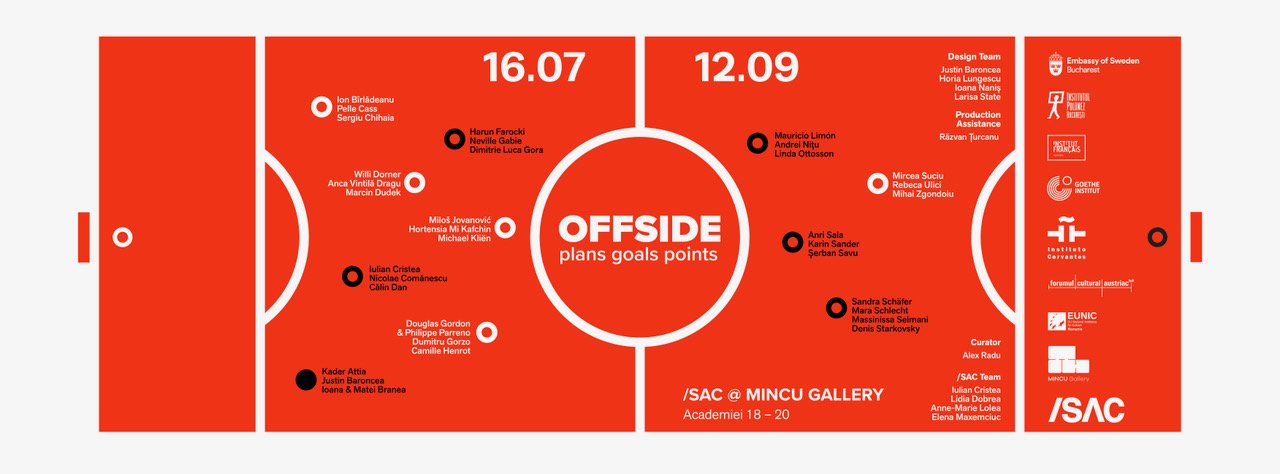
Offside. Plans, goals and points
July 16th – September 12th
/SAC @ MINCU GALLERY
curator: Alex Radu
graphic/exhibition design: Justin Baroncea, Horia Lungescu, Ioana Naniș, Larisa State
production assistance: Răzvan Țurcanu
/SAC Team: Iulian Cristea, Lidia Dobrea, Anne Marie Lolea, Elena Maxemciuc
artists: 111invers1, Yuri Ancarani, Kader Attia, Justin Baroncea, Ion Bîrlădeanu, Ioana & Matei Branea, Pelle Cass, Sergiu Chihaia, Iulian Cristea, Nicolae Comănescu, Radu Comșa, Călin Dan, Willi Dorner / Lisa Rastl, Anca Vintilă Dragu, Marcin Dudek, Harun Farocki, Neville Gabie, Dimitrie Luca Gora, Dumitru Gorzo, Miloš Jovanović, Hortensia Mi Kafchin, Michael Kliën, Mauricio Limón, Robert Marin, Andrei Nițu, Linda Ottosson, Anri Sala, Karin Sander, Șerban Savu, Sandra Schäfer, Mara Schlecht, Massinissa Selmani, Mircea Suciu, Rebeca Ulici, Mihai Zgondoiu
The exhibition is organized by /SAC - The Space for Contemporary Art and can be visited until September 12th at /SAC @ MINCU GALLERY (str. Academiei nr. 18-20) from Monday to Saturday, 2 PM to 8 PM.
We would like to thank the Embassy of Sweden, the Polish Institute, the French Institute, Goethe-Institut, Cervantes Institute, the Austrian Cultural Forum and Cărturești Modul for their support.
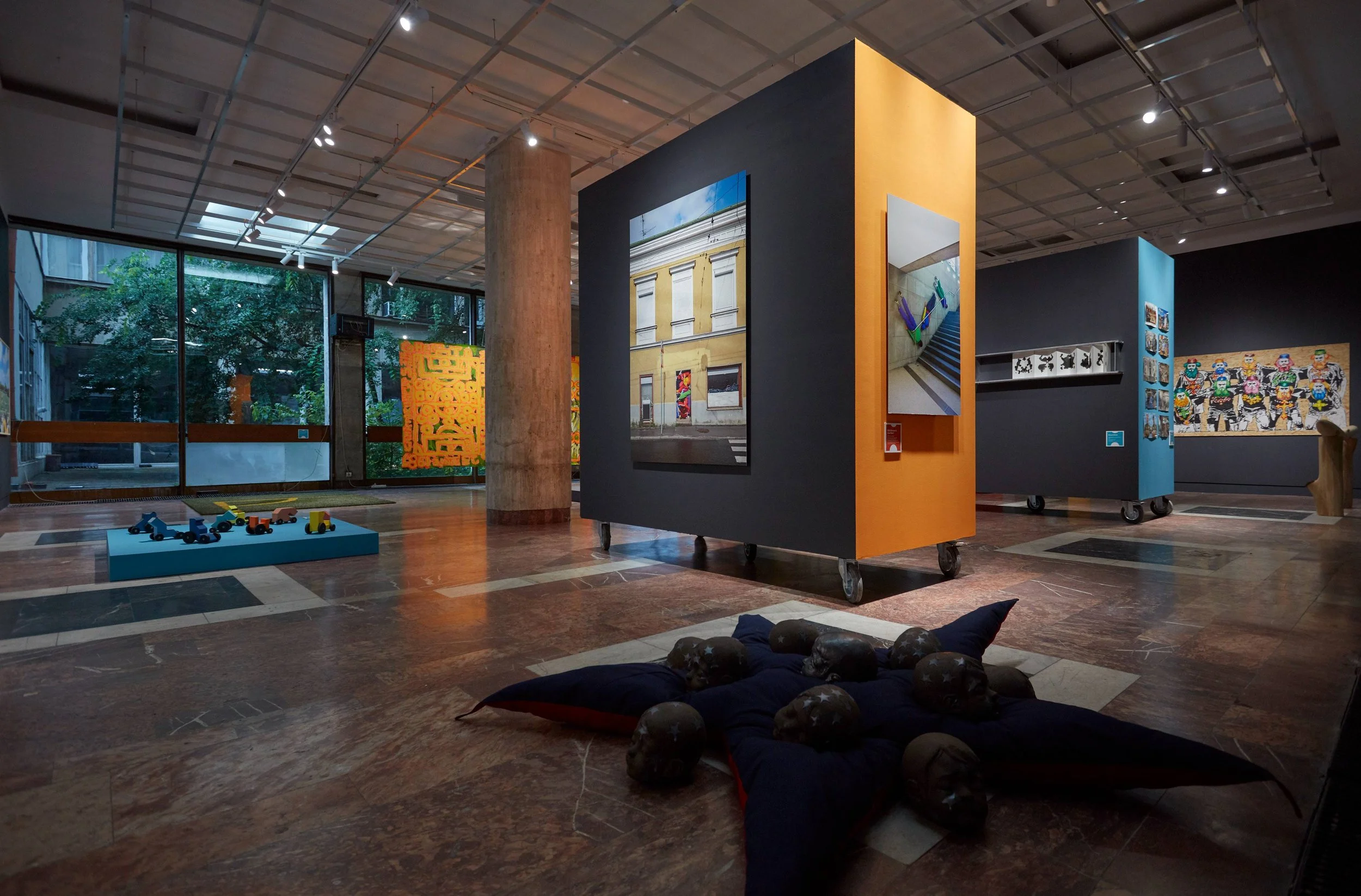
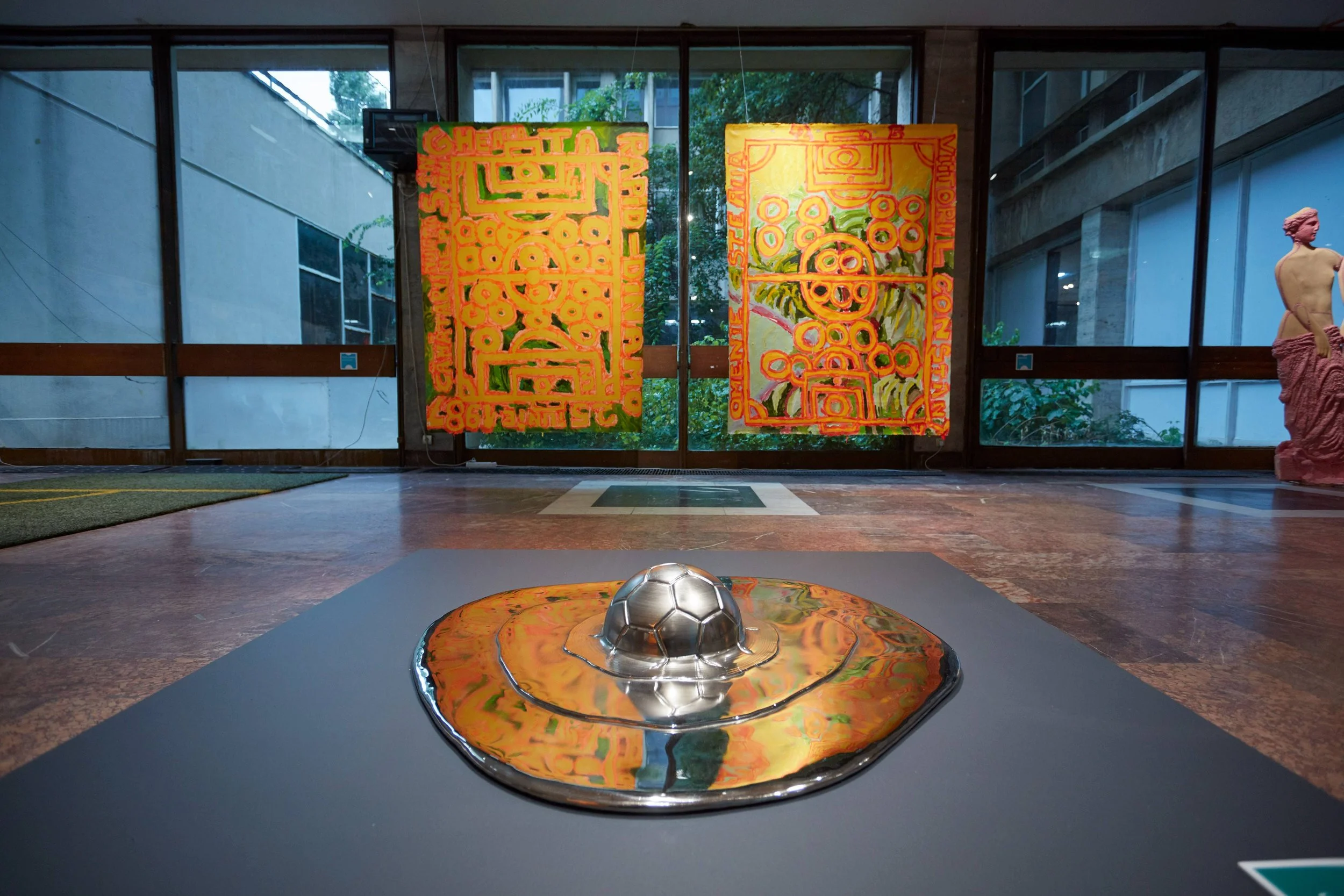
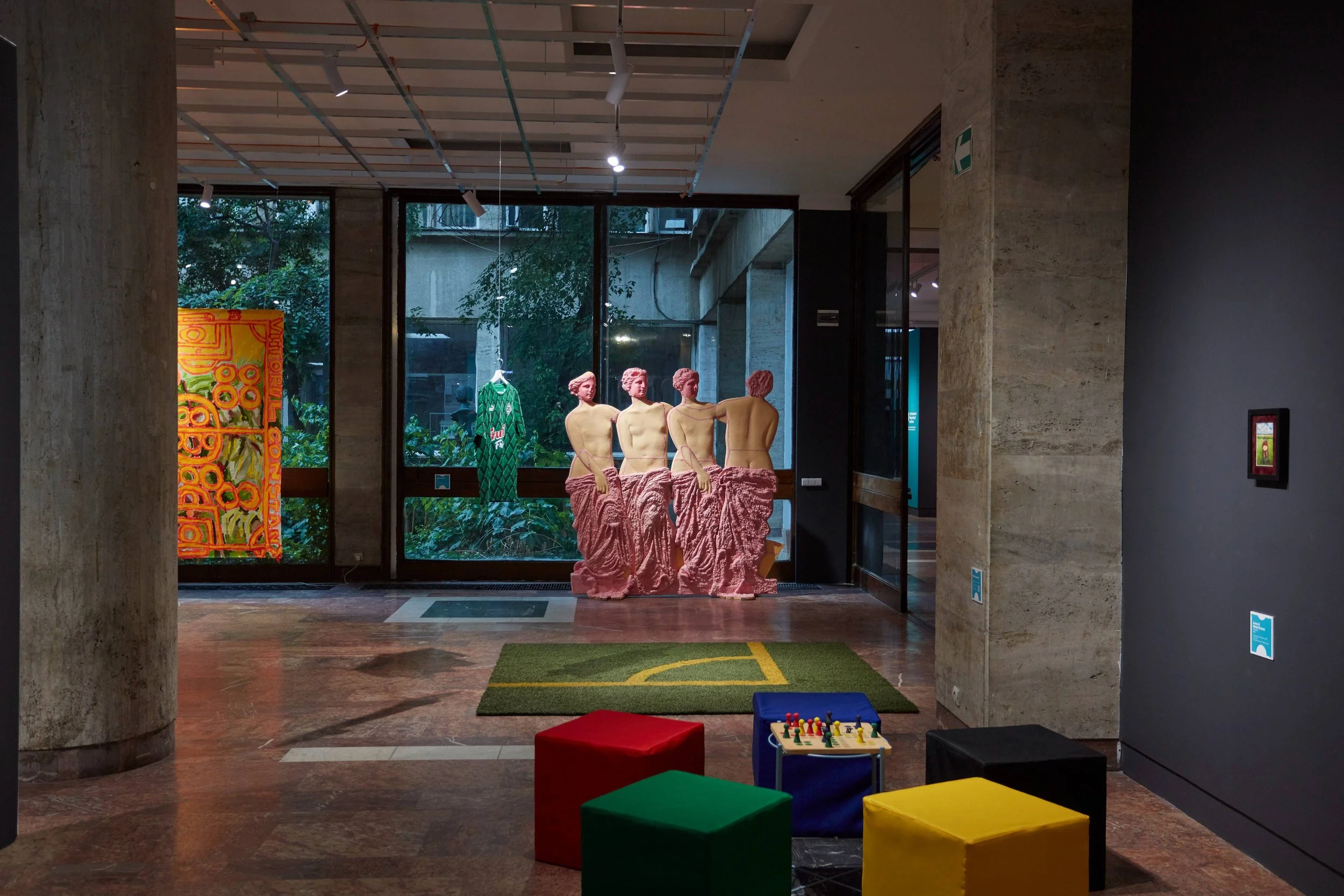
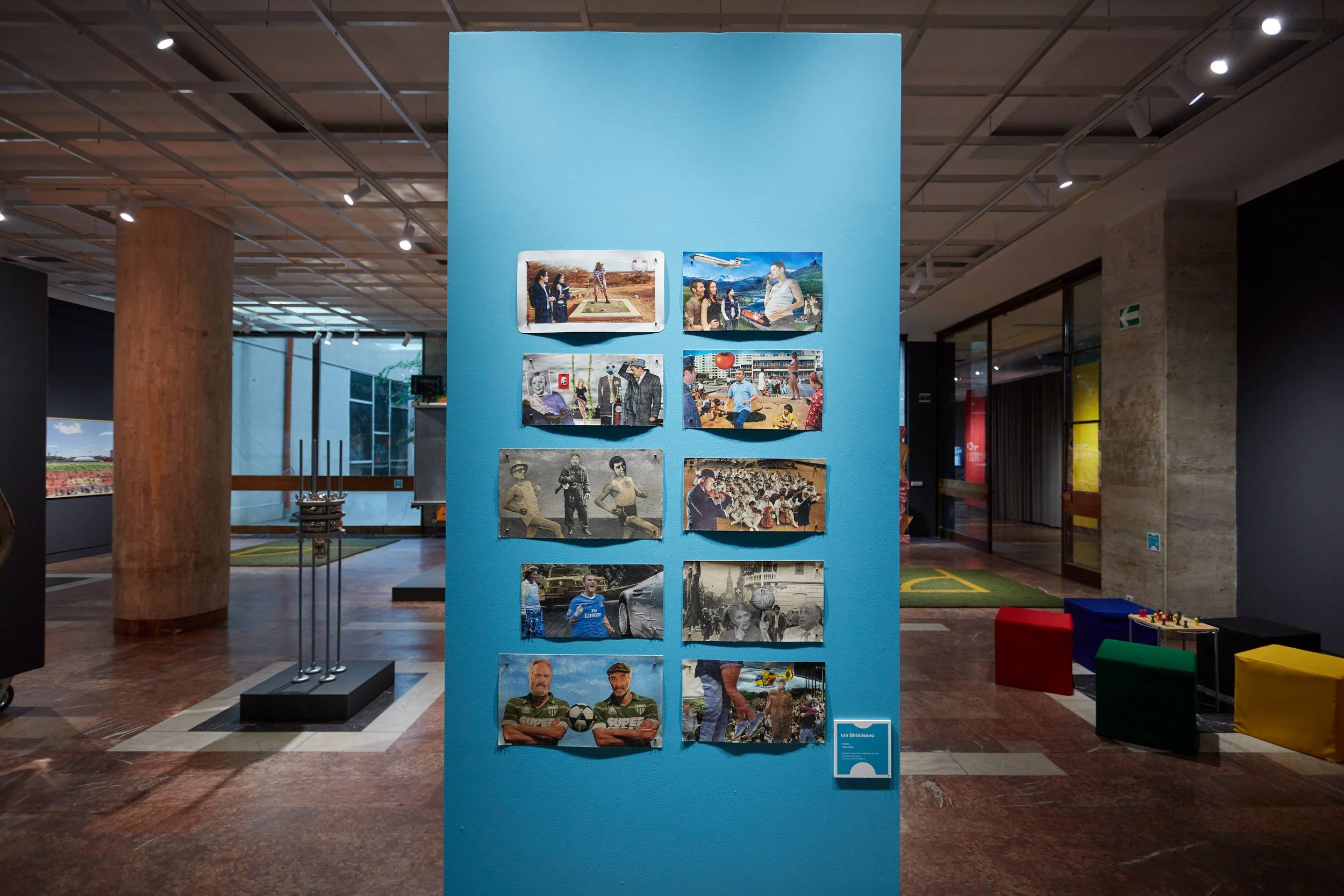
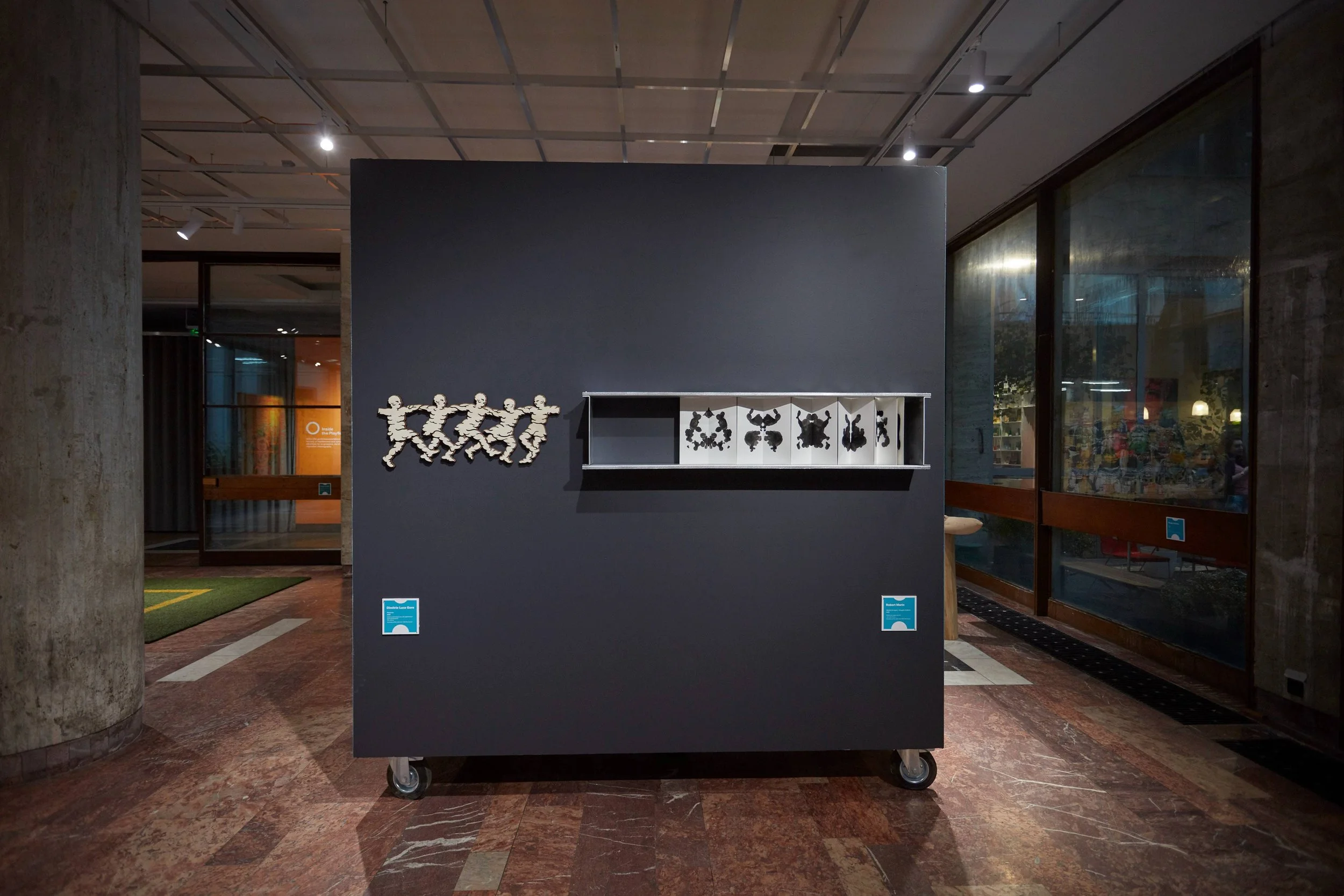
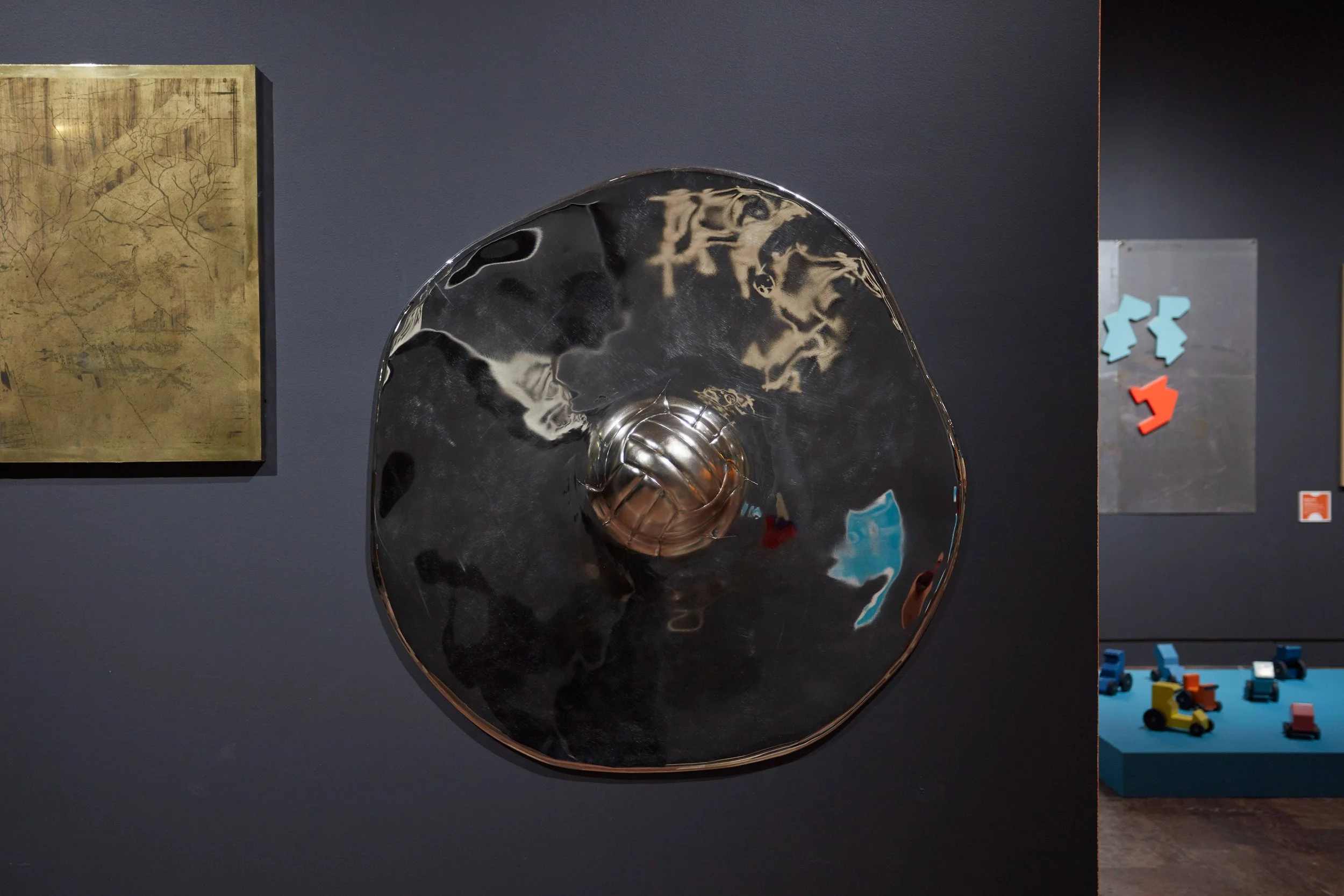
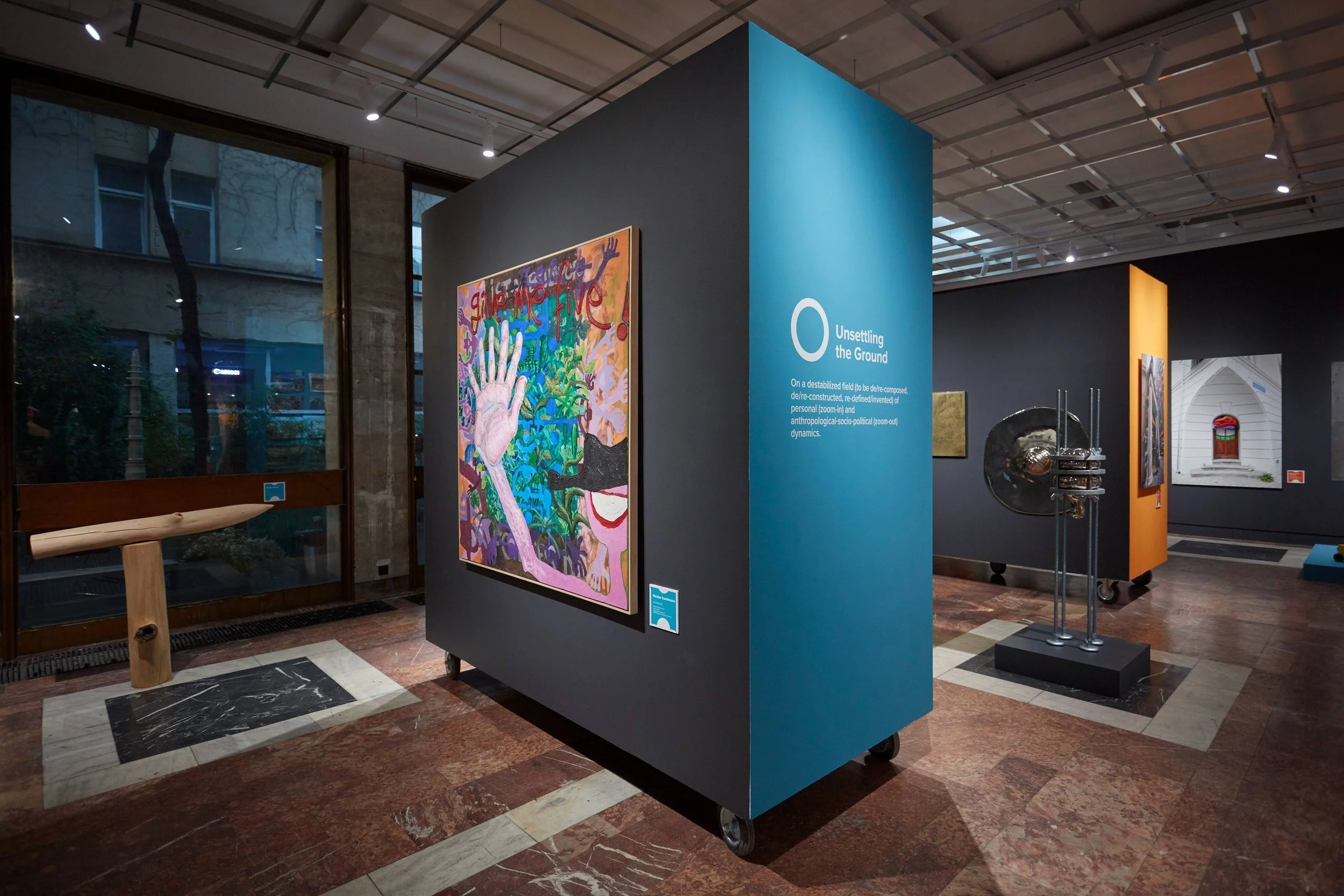
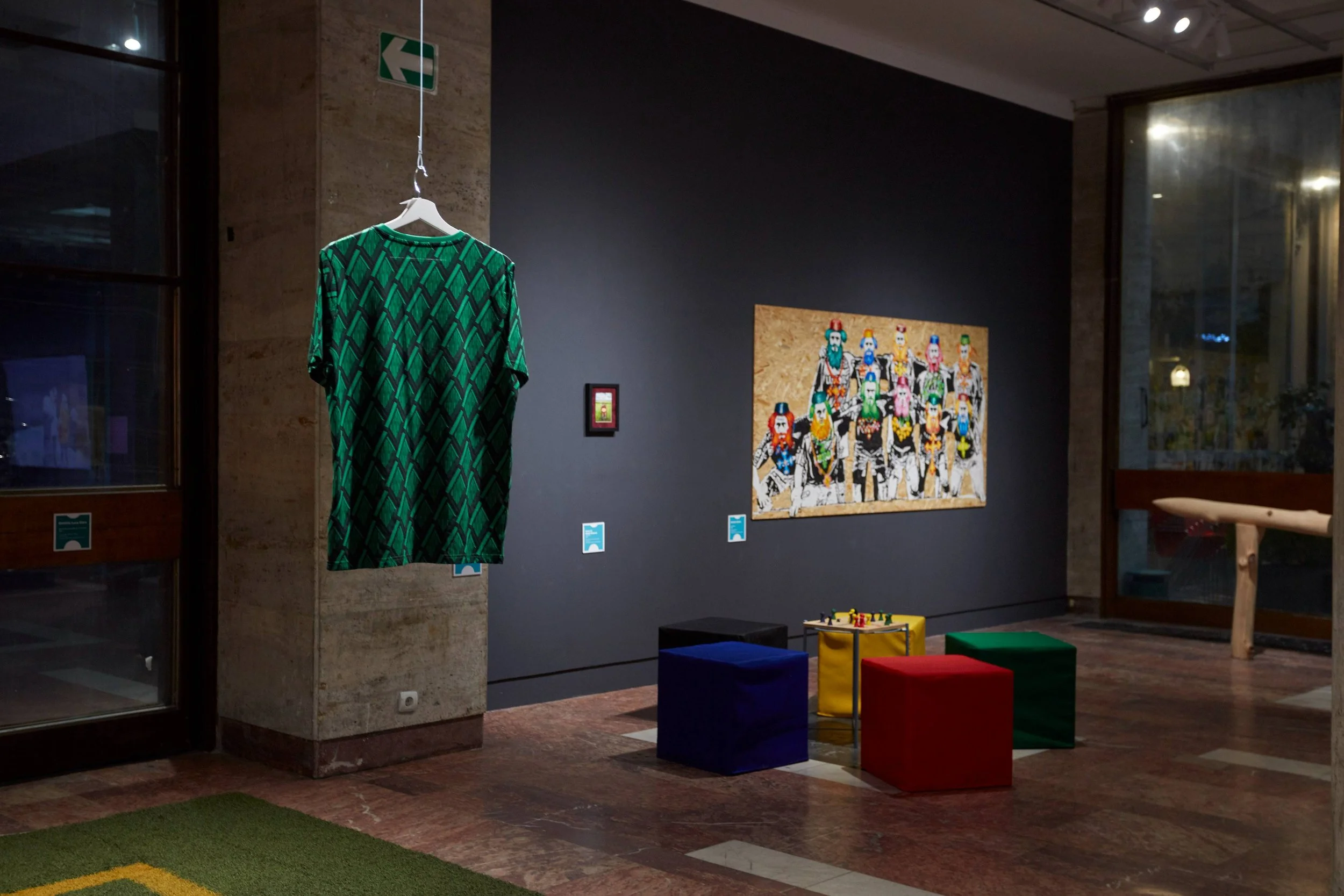
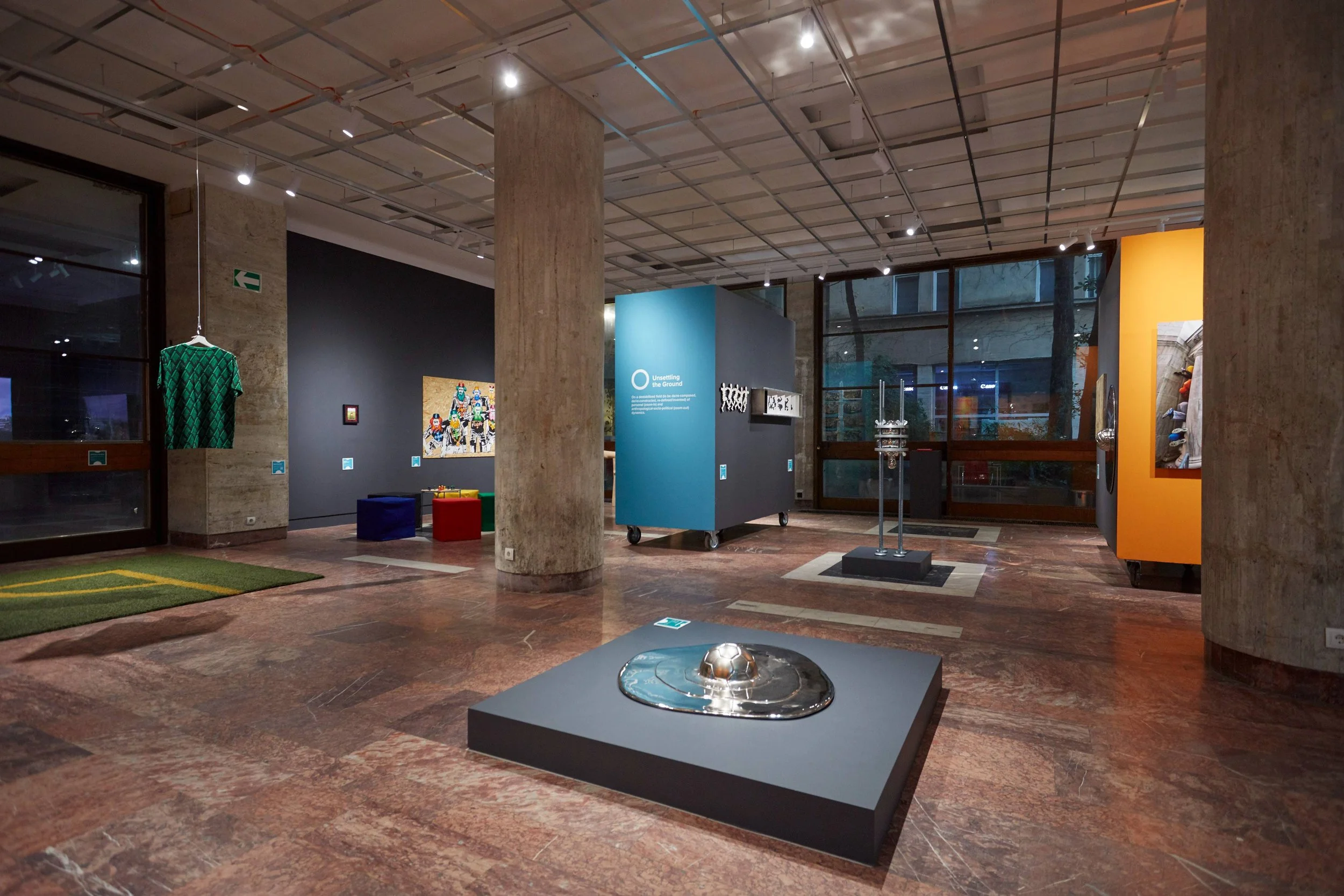
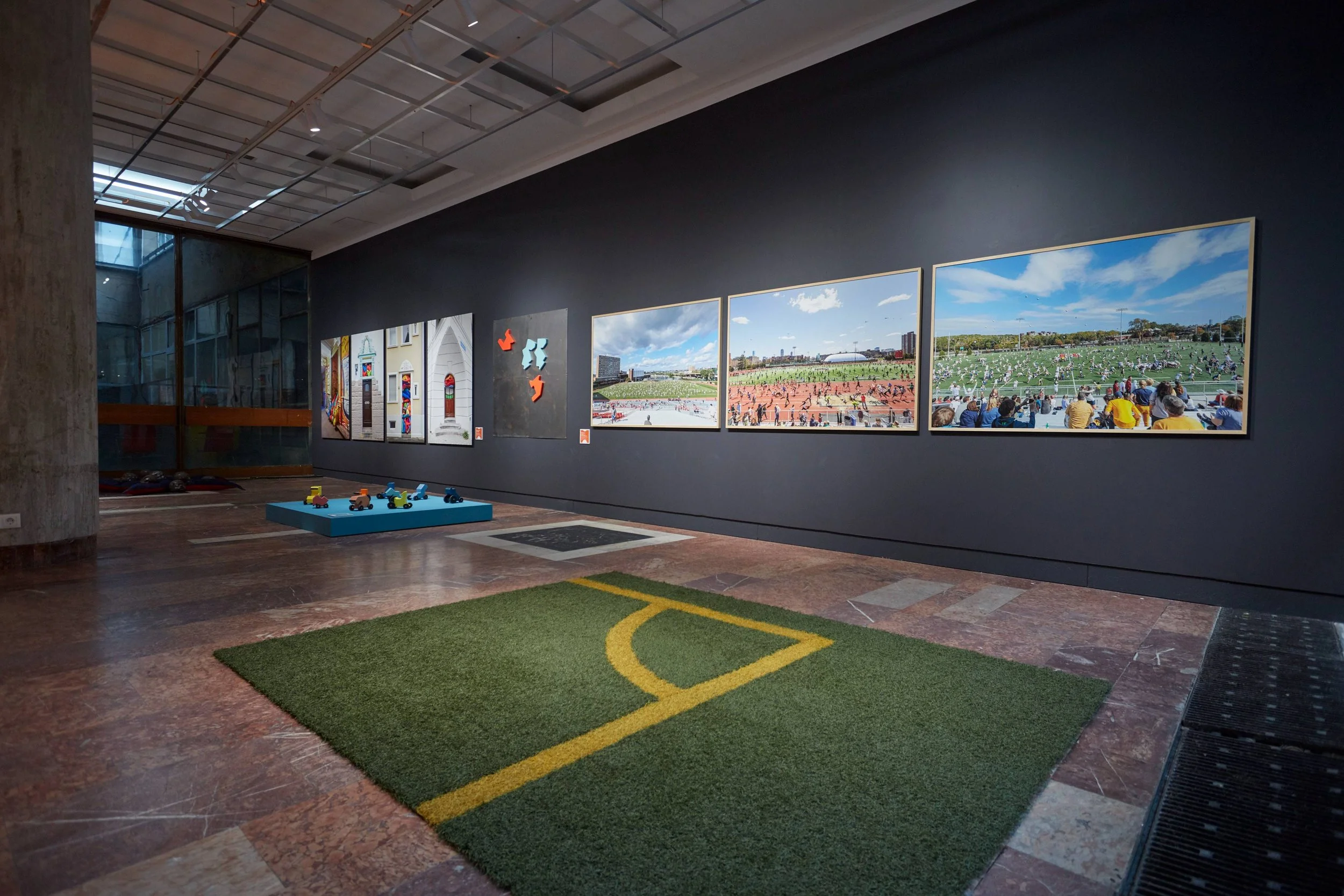
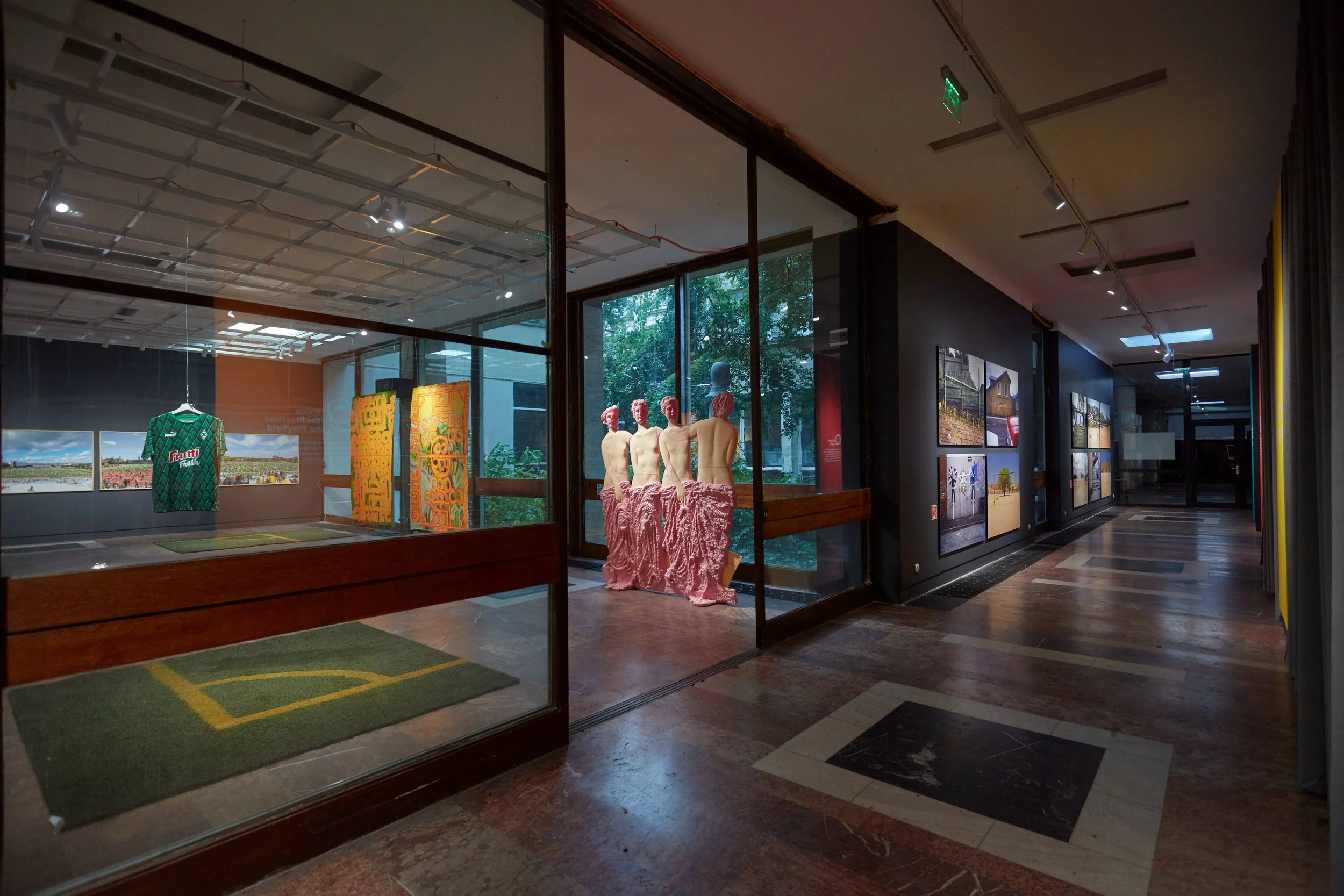
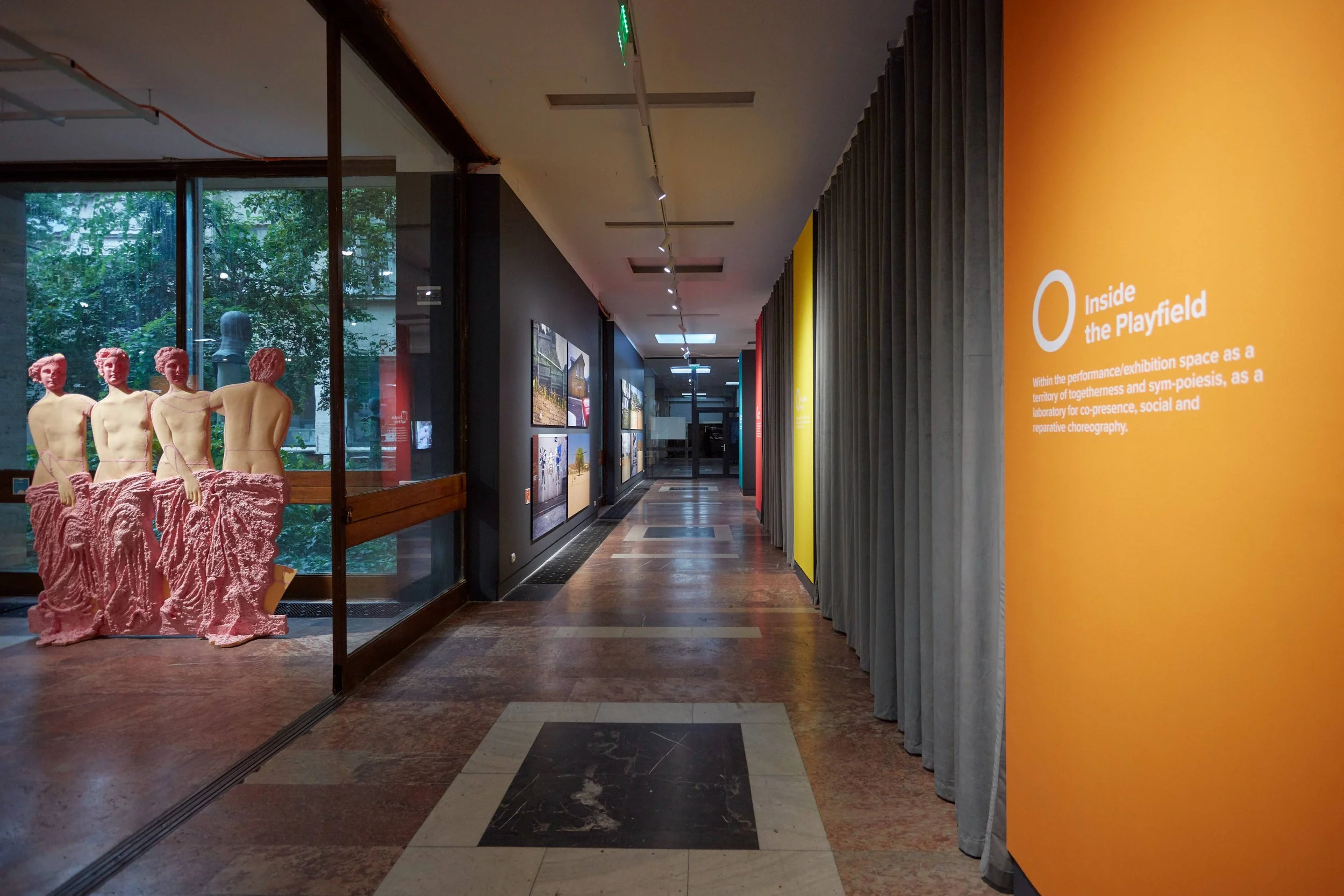
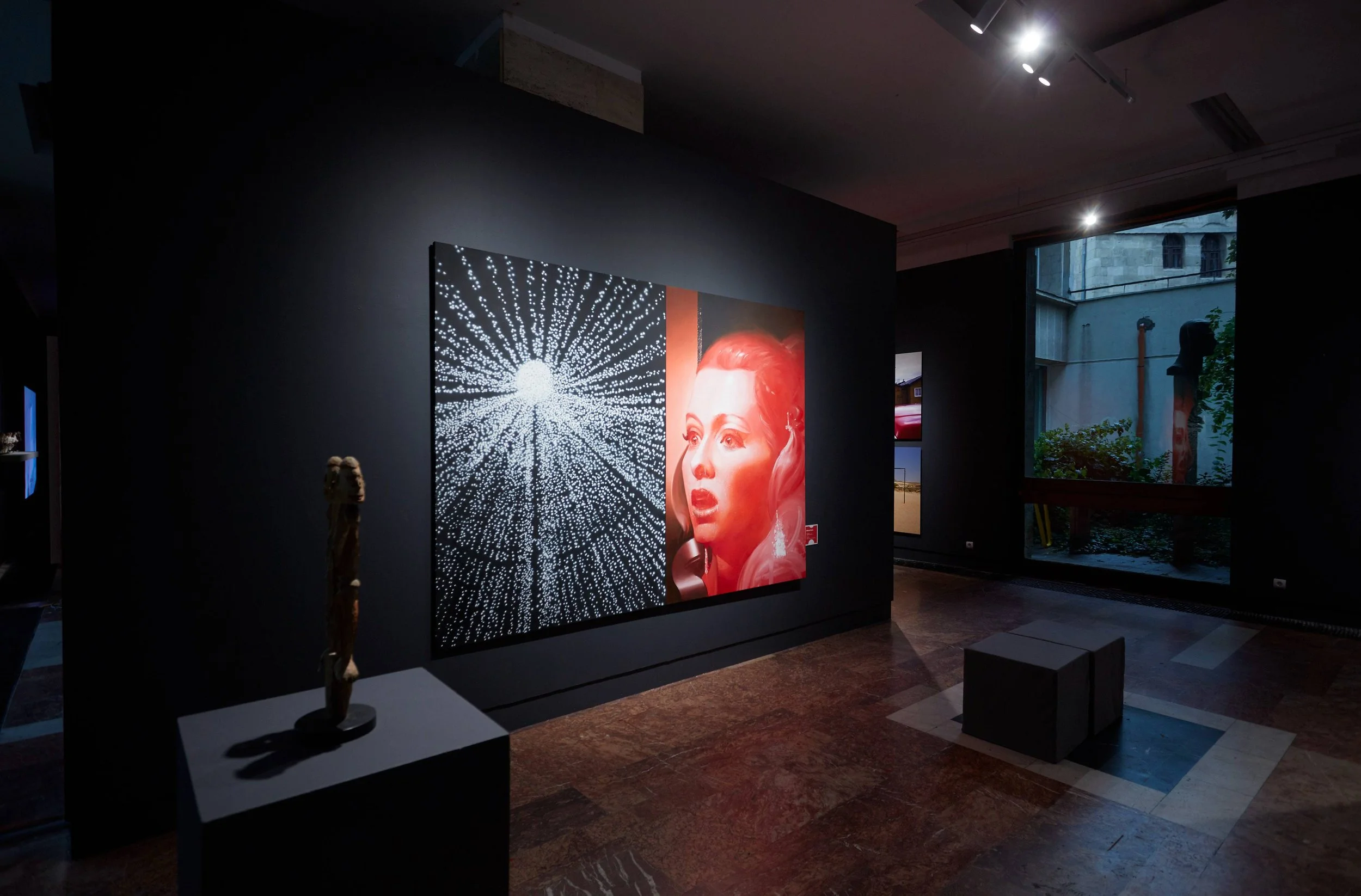
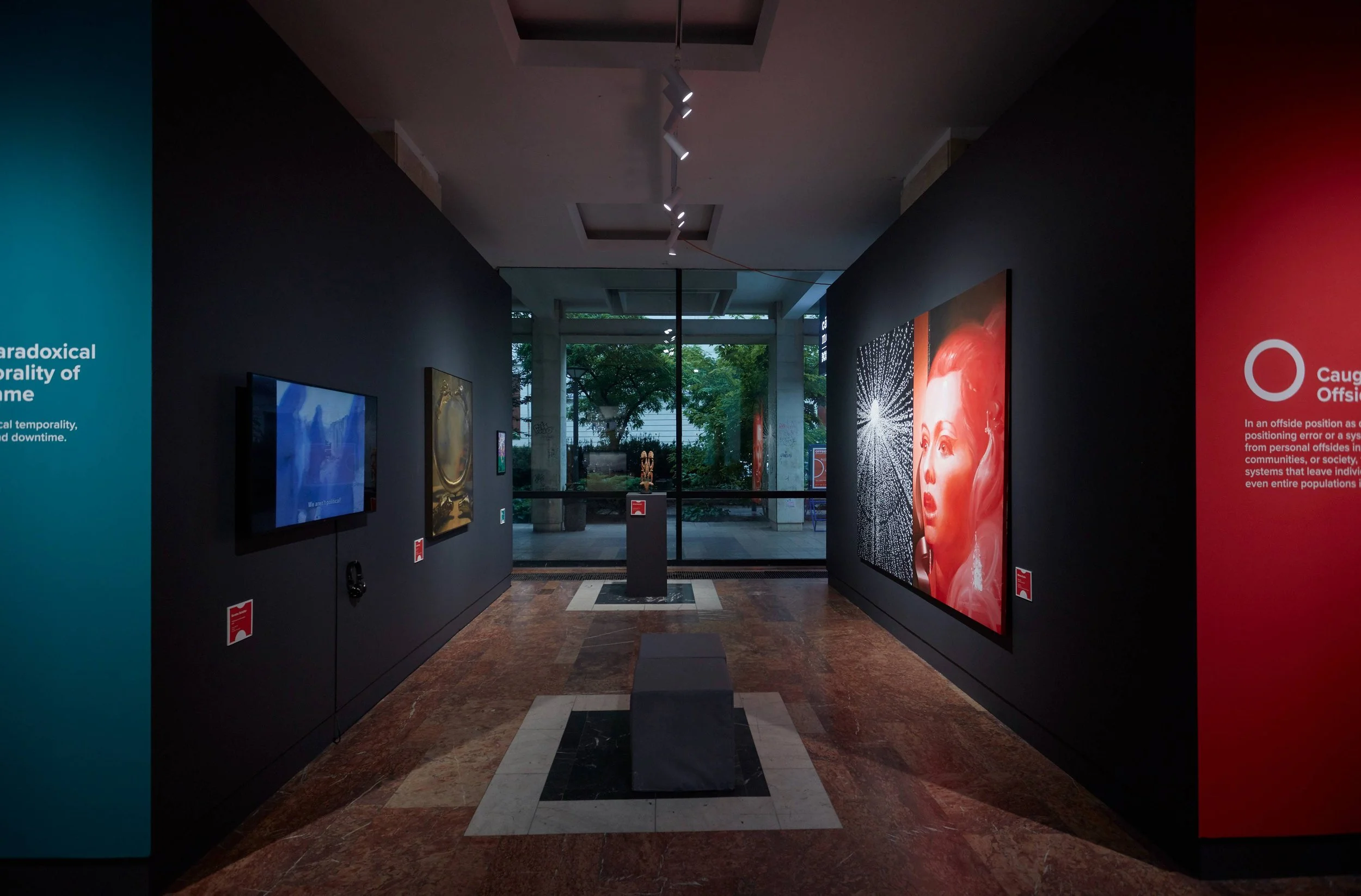
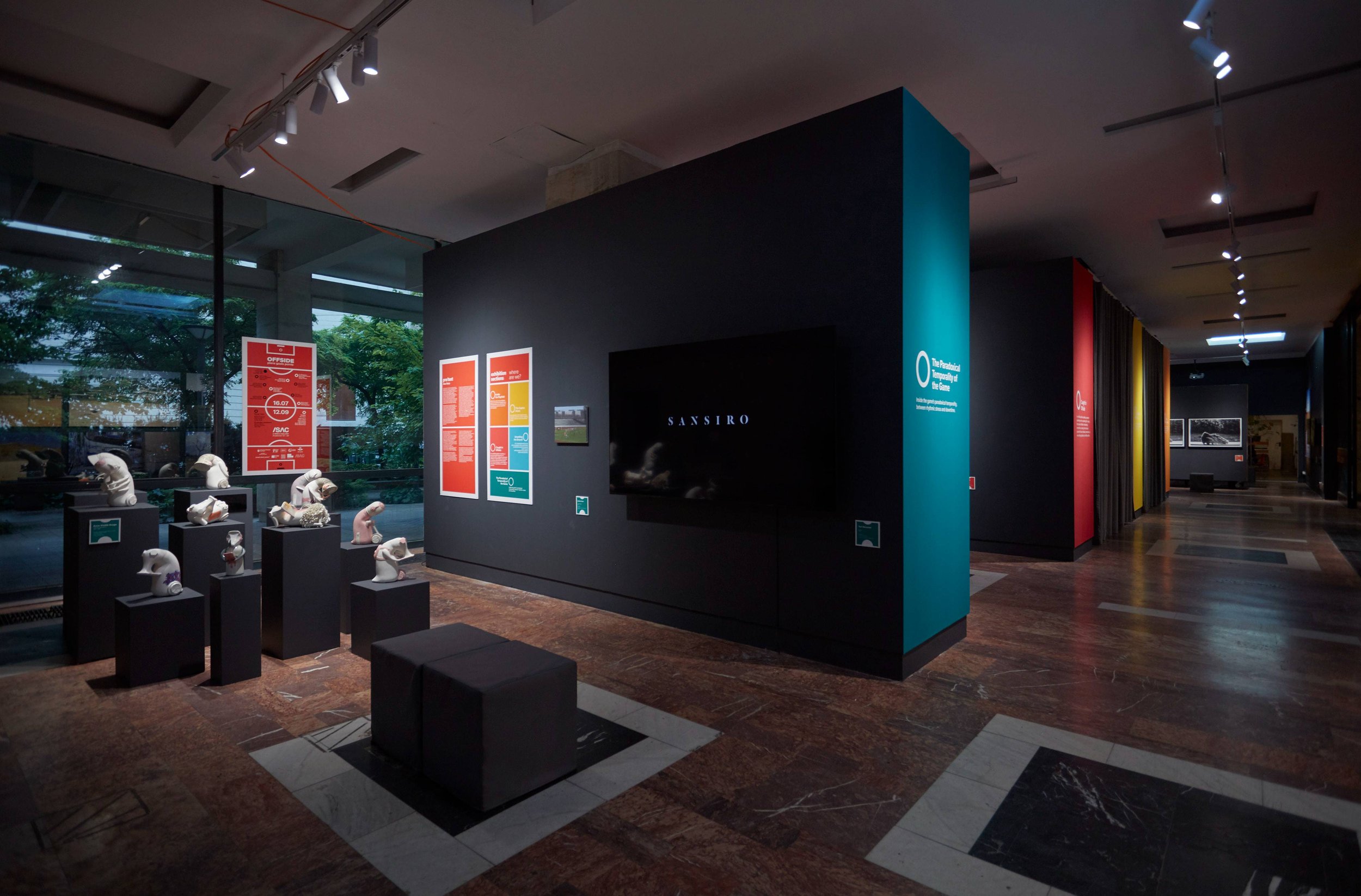
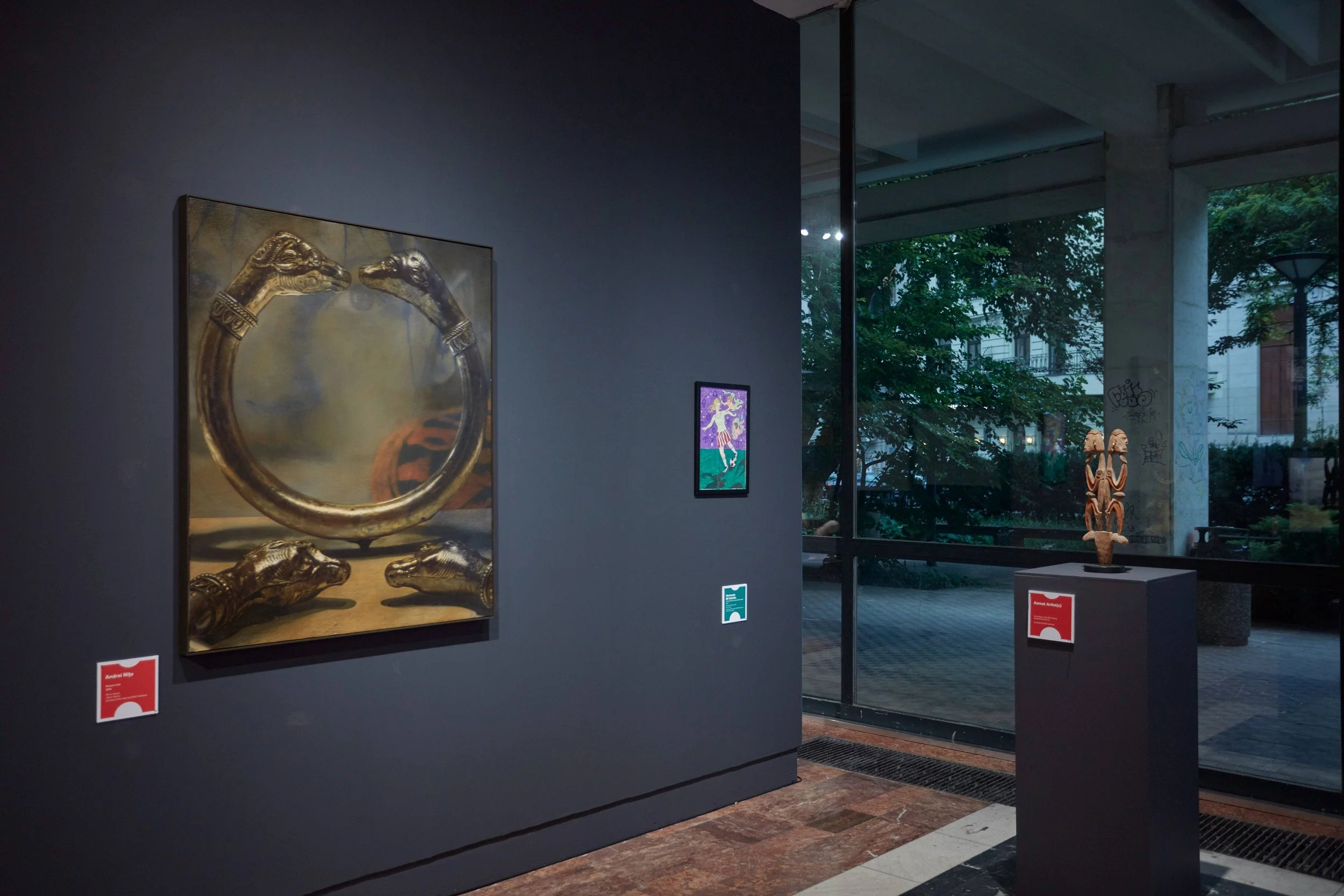
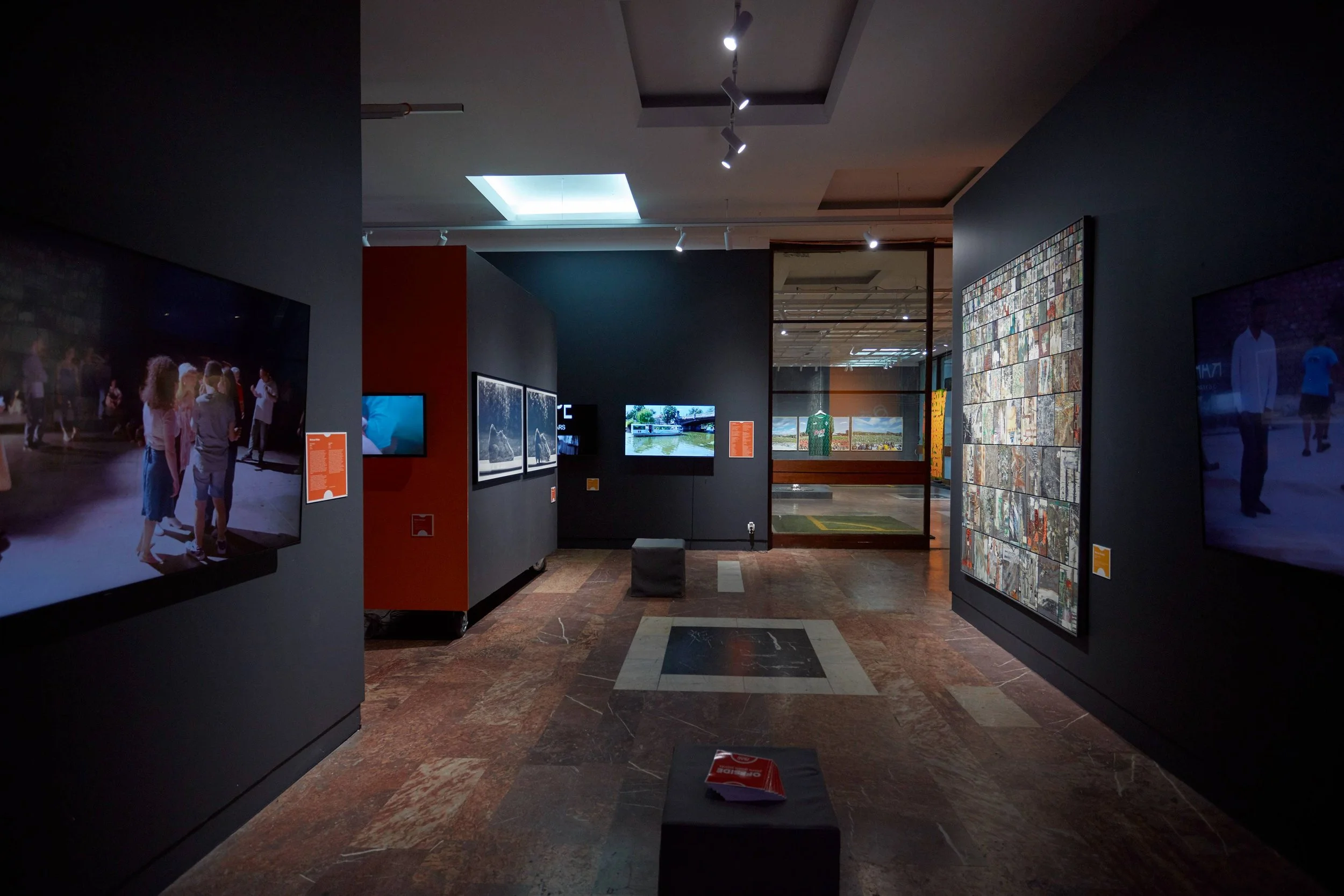
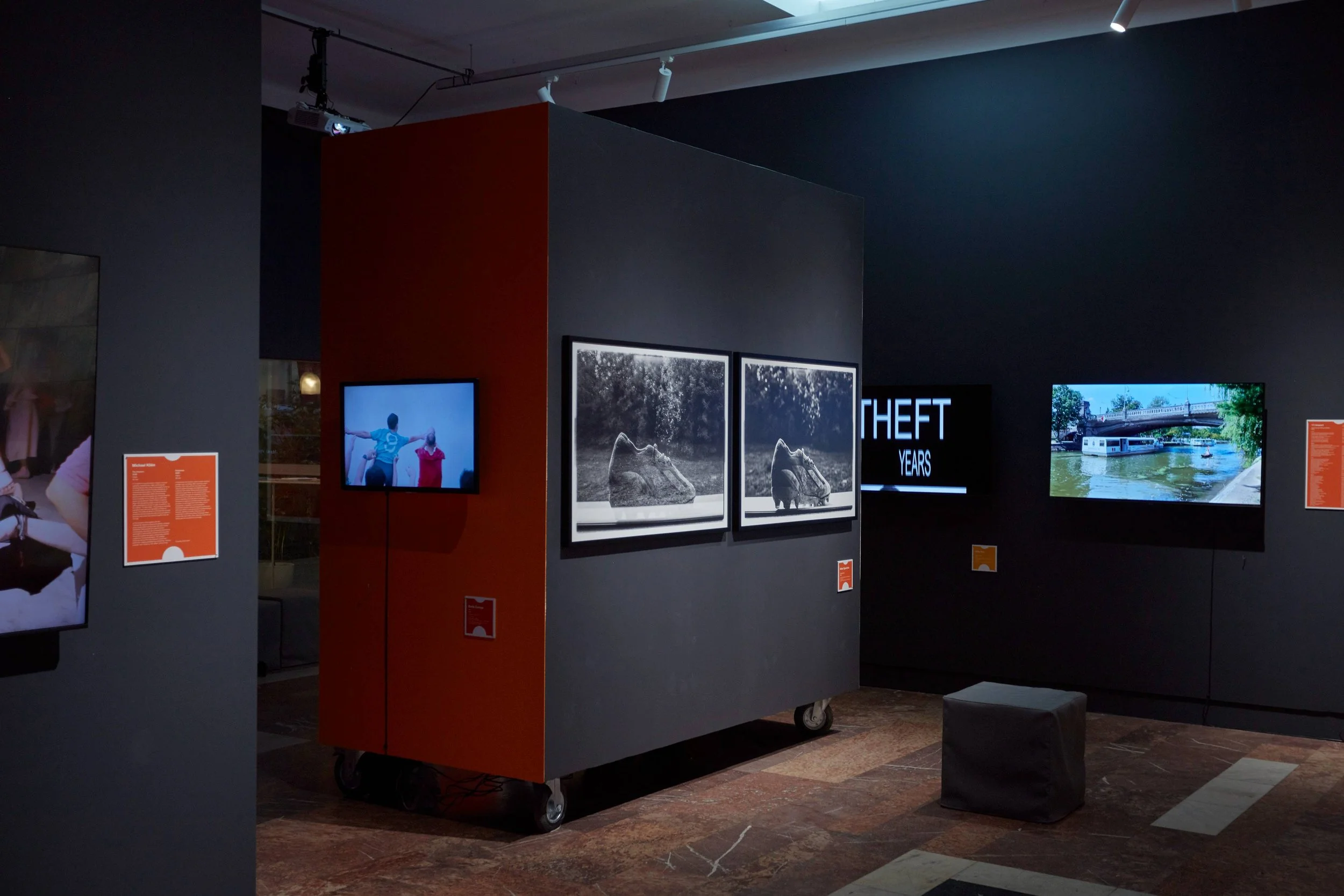
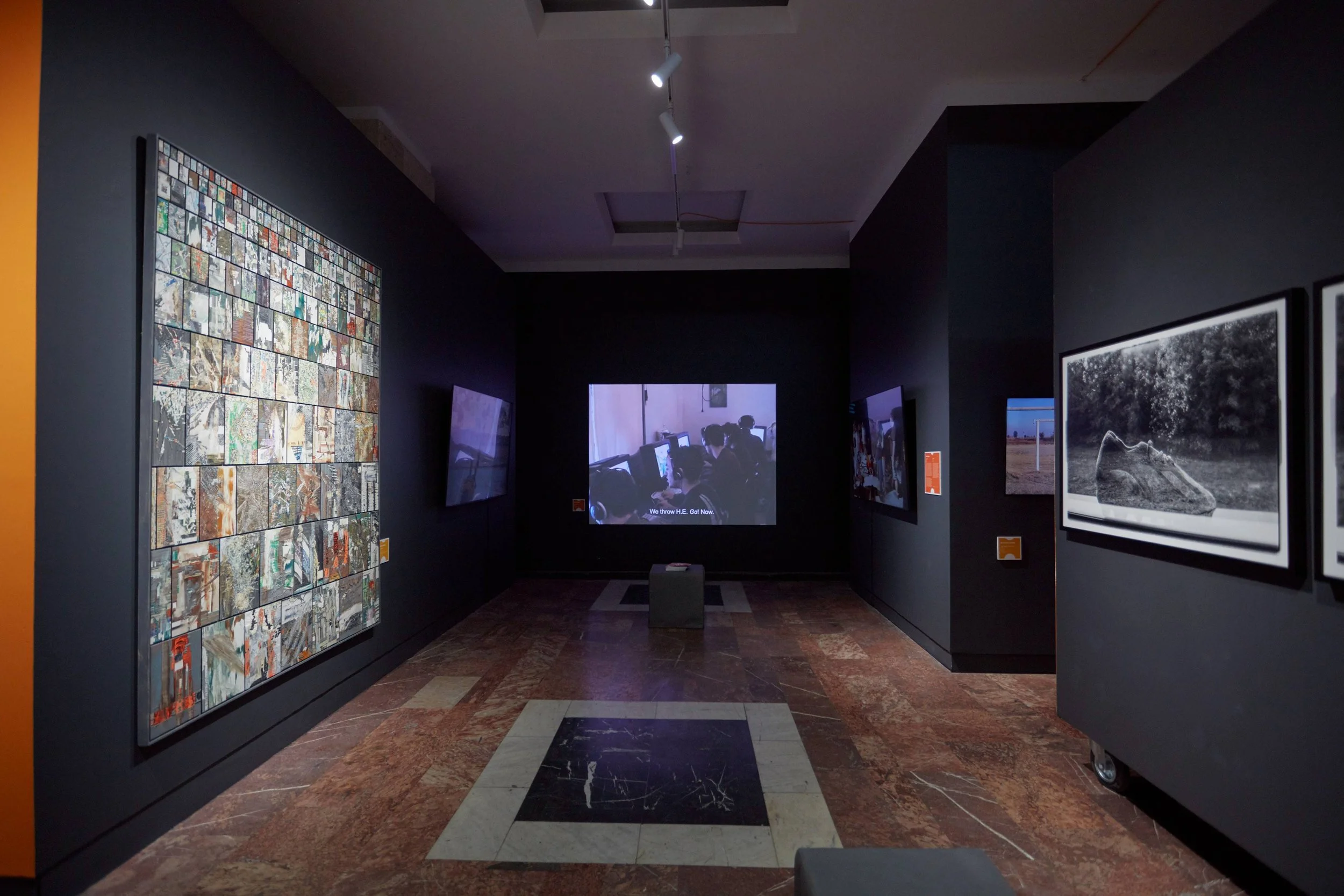
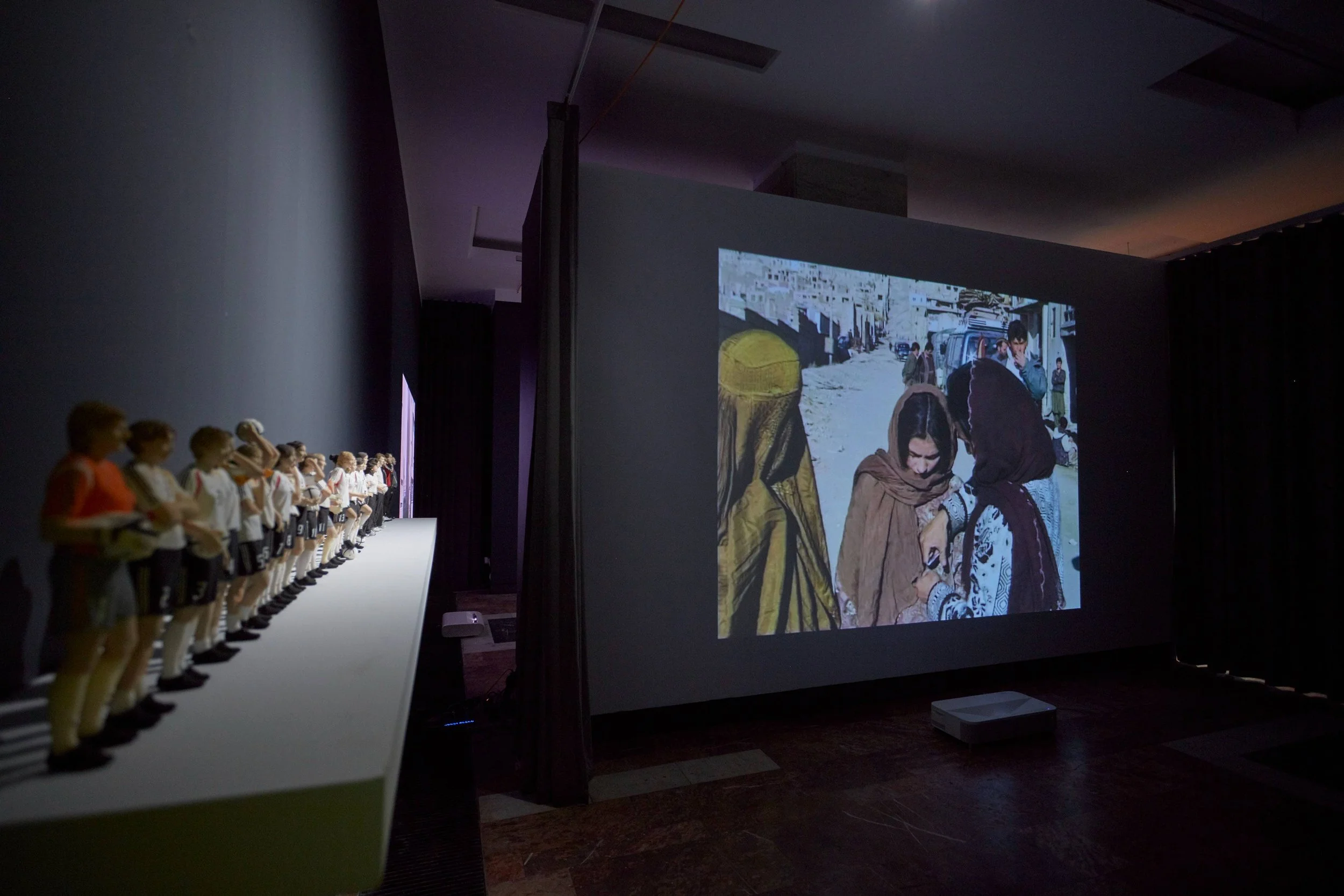
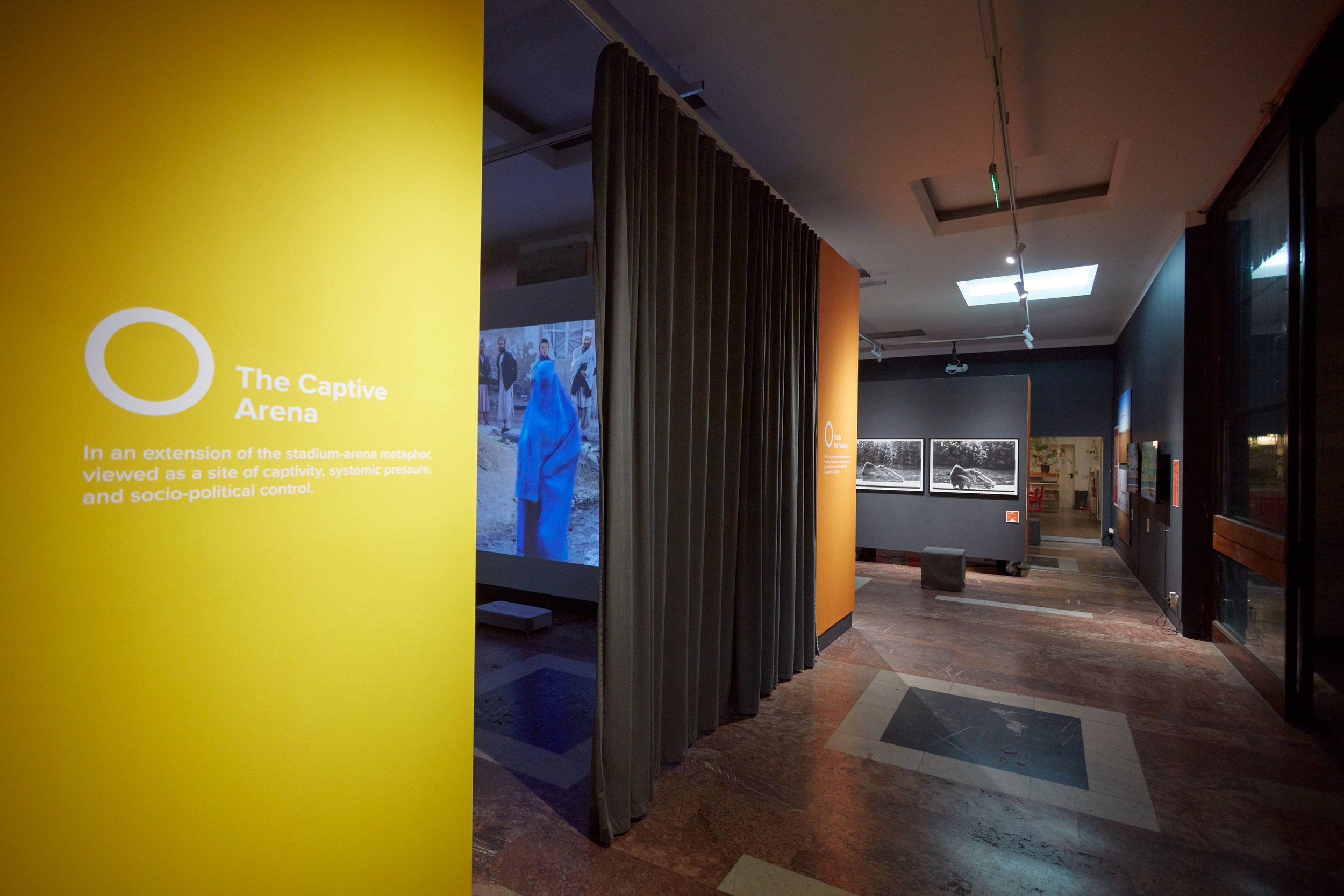
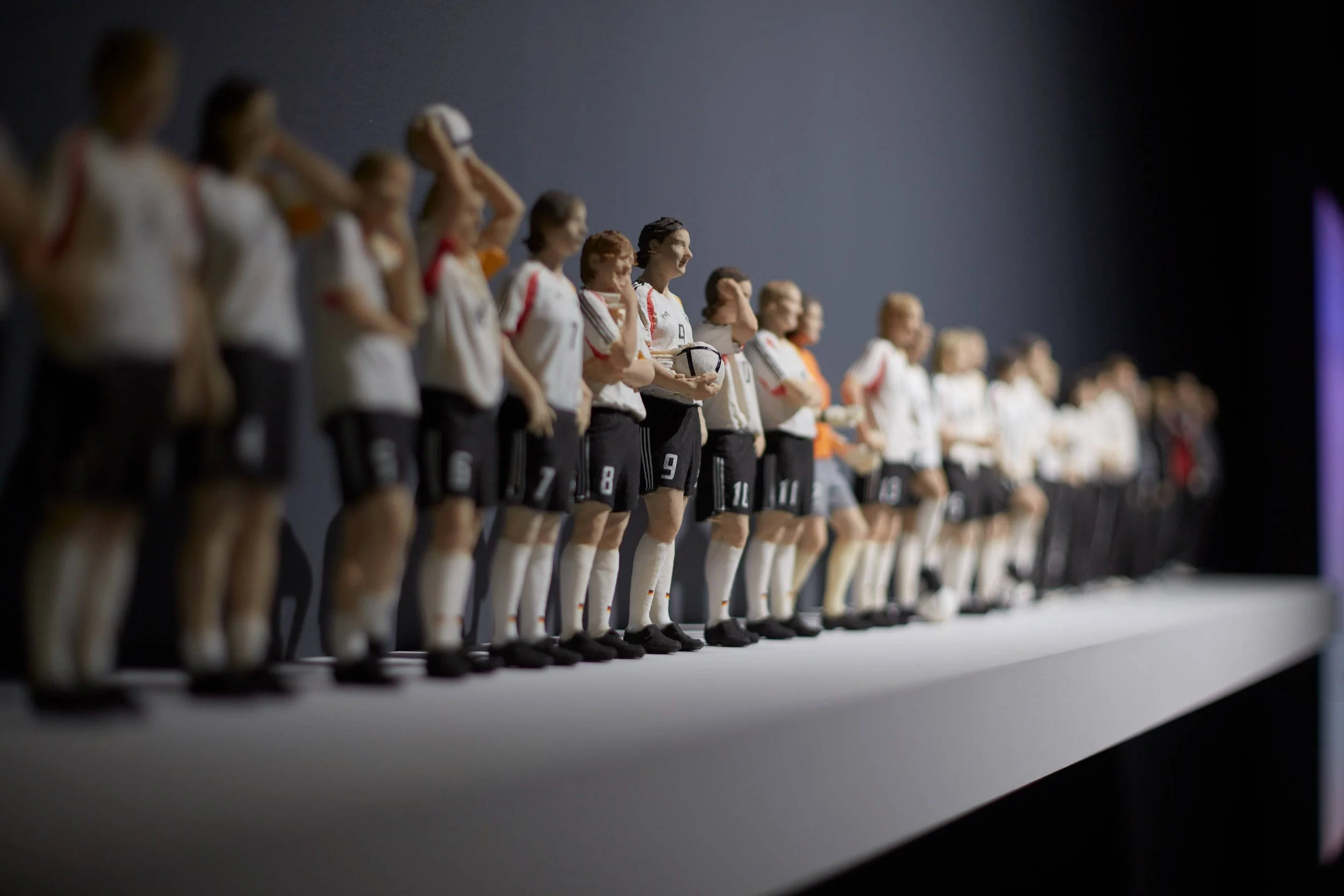
Offside. Plans, goals and points
a pre/text by Alex Radu
At a time when most of the world’s attention is switched over to a sports competition (the 2026 FIFA World Cup), we suggest a reflection on resonance and resilience. While our first show of the /SAC @ MINCU GALLERY curatorial programme explored “Rhythmic Stress” as an “out-into-the-world” release of personal/individual flows and breathing, the second exhibition proposes a smooth sequel toward group mechanics and collective effort. "How we breathe” segues into "how we coordinate our movements" in order to produce and understand common shapes/spaces and rhythms/rules, collectively.
Team sports (and, in a more general sense, collective work and creation as well), perceived as “living architecture”, become the ultimate metaphor for co-working. The playing field is activated through rules that dictate flows, collaborations and co-presences; these turn into choreography and create in/visible “working geometries”. It is a form of “sym-poiesis” (Donna Haraway), a “making-with”, a game in which the final result doesn’t belong to any one individual, but to the whole. This approach resonates with the way in which shared concerns across different artistic disciplines (visual and performing arts, film, and architecture) co-exist and are co-working within this curatorial programme.
We explore competitiveness, but in doing so we also filter out dismaying stakes, by proposing a clear distinction between Competitiveness and Polarization-Aggression-Toxicity. We are interested in what separates us and what brings us together: co-presence, diversity and togetherness, the plurality that reclaims public space performatively (Judith Butler), as well as that dimension of playfulness found in games. On the other hand, competition remains a rhythmic stress generator; it involves the rhythm of effort, the alternation between rest and maximum intensity, the time pressure – an equivalent to deadlines in architecture or to frame rhythm in films. Yet it is this very rhythmic tension/stress that allows the individual to feel the presence of another, transforming resonance from a simple echo into a responsive relationship and vibratory medium (Hartmut Rosa). The title itself, “Offside”, represents an intense moment of tension in the natural course of the game, a positioning “error” that alters-obstructs the flow, forcing a re-evaluation within the group’s composition.
We should be seeking that “compositionism” (Bruno Latour) capable of building a common world without resorting to polarization-aggression, because “civilization is a performance, a fragile construct upheld by shared illusion, habit, and necessity” (Charles Moore, for the /SAC exhibition “Notes from Underground” at Malmaison). We live a contemporaneity of differentiations, in a world that polarizes us, in a system that tends to put us in competition, rather than guide us toward perceiving ourselves as part of anthropological-socio-political and human-nonhuman compositions (reference to the /SAC exhibition “Individual All-Around” at Timișoara, European Capital of Culture 2023).
We should be planning our future within a reimagined aggregation of our differences (Terry Smith), an alternative to a homogenizing universalism, by embracing that “Mondialité” (Édouard Glissant’s concept explored by Hans Ulrich Obrist), a global openness that does not erase particularities, but encourages dialogue between them instead. “The field”, the exhibition space, a space of togetherness and representations, can transform the stadium from a place of capturing into a laboratory of social choreography (Michael Kliën), with political-archive bodies that are re-mapped/re-curated, constantly “polluted”/ “contaminated” by norms and interactions, by the histories of our encounters (Anna Lowenhaupt Tsing). Our movements qualitatively transform common space itself, while our co-rhythms are the friction between relationships, a force that produces energy.
And, certainly not by chance, in parallel with an archaeological visual grammar-geometry by Aby Warburg, this curatorial text meant for a future exhibition aims at constructing in/visible “working geometries” (zoomed-in/out) between contemporary discourses-quotations and (collaborative) exhibitions-concerns-explorations by /SAC within various context-spaces, seeking a programmatic coherence that probes the intersection between art/representation and individual/collective life.
-
a curatorial pre/text by Alex Radu, quoting:
“Sympoiesis is a word proper to complex, dynamic, responsive, situated, historical systems. It is a word for worlding-with, in company. Sympoiesis enfold autopoiesis and render it generative and open.” (Donna Haraway, Staying with the Trouble: Making Kin in the Chthulucene, 2016)
“Compositionism takes up the task of searching for what is a common world... It emphasizes that things have to be put together (latin componere) while retaining their heterogeneity.” (Bruno Latour – An Attempt at a Compositionist Manifesto, 2010)
“What makes our experience of contemporaneity today distinct from that of earlier times? I believe that we have to find, with increasing urgency, our futures entirely within a reimagined aggregation of our differences.” (Terry Smith)
“Plural action forms the space of appearance... bodies in their plurality lay claim to the public, and that claim is a performative one, enacting the very public space for which it pleads.” (Judith Butler: Notes Toward a Performative Theory of Assembly, 2015)
“Collaboration means working across differences, which leads to contamination. Without collaborations, we all die.”
“Collaboration is work across differences, yet this is not the innocent diversity of self- contained evolutionary tracks. The evolution of our “selves” is already polluted by histories of encounter; we are mixed up with others before we even begin any new collaboration.” (Anna Lowenhaupt Tsing, The Mushroom at the End of the World)
“Civilization is a performance, a fragile construct upheld by shared illusion, habit, and necessity.” (Charles Moore for “Notes from Underground” at /SAC @ Malmaison, 2025)
“Contemporaneity today consists of countless simultaneous ways of being, creating, seeing, and appreciating the same world, but also of social and cultural pluralities. And we try to keep up, each in his own way, with a Present that becomes, in its fast, unpredictable, incessant evolution, as incomprehensible as a hyperobject. We live a contemporaneity of differences, in a world that divides and polarizes us, in a system that tends to put us in competition rather than guide us to see ourselves as part of a composition.
Then, what could the concept of composition (still) mean today? In contemporary art, in socio-political dynamics, in our personal lives? Can we envision ourselves together, in compositions, inspired by the coexistence of today's art worlds' multitude (and variety) of medialities, approaches, artistic, curatorial, and institutional discourses, where these elements do not negate or cancel each other out?
How can the (international) exhibition and the exhibition space, as a place of togetherness, become an intersection of today's major art themes: the imperative need for composition/aggregation of communalities/similarities and differentiations, for inclusion, collaboration, and non-hierarchical acceptance, decolonization, and decentering?
The exhibition space is more than a white cube (hosting an exhibition that could have taken place anywhere else) and becomes a place where artists and their works intersect/come together with their practices and discourses, with the other exhibition makers (curators, collaborators and exhibition designers) with their visions, with/in the space-as-context with its own historical temporalities included, with institutional discourses, and later with the visitors and their ways of seeing/receiving/assimilating. The exhibition is thus a place of togetherness, a shared space of connection, composing and composition. We enter the exhibition space with all our current temporealities that shape us personally, that enrich and individuate us, and that are (still/once
again) opened in the present moment. We per/re-ceive all the tangent temporealities of those we intersect with in the exhibition/ encounters space. The composition extends into non-specific, contextual temporealities such us the pandemic or the wars in Ukraine and Gaza, into all the hyperobjects that exceed our spatio-temporal perception (when/where they begin/end), but whose existence leave an imprint on us, such as Anthropocentrism, Climate Change or Capitalism. (Alex Radu, for “Individual All-Around” /SAC exhibition in Timișoara - European Capital of Culture 2023)